Explore
Ask for a plain-language overview, then follow up on the parts you need to understand.
Use it with intention
Everyday workflows for research, learning, planning, and creative work—with a person guiding the goal and checking the result.
Jump into the guide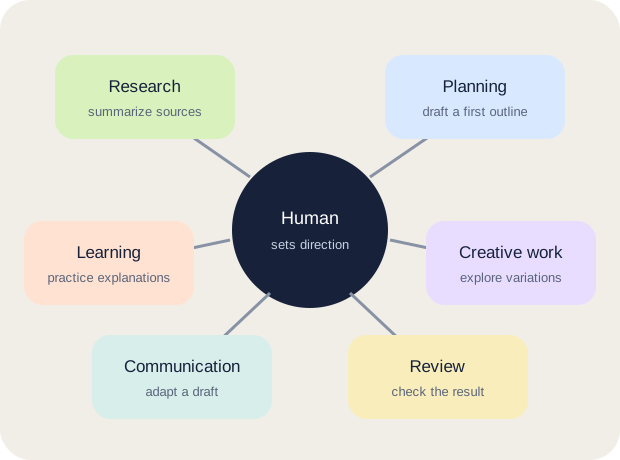
AI is often most useful when the task has a visible first draft and you can judge the result. Ask it to outline a report, sort notes into themes, generate practice questions, or suggest several ways to explain an idea. Treat the response as a draft to inspect rather than a finished decision.
For tasks involving private information, professional judgment, or high consequences, check your organization’s rules and choose an appropriate tool before sharing anything.
Ask for a plain-language overview, then follow up on the parts you need to understand.
Turn notes you provide into an outline, checklist, or set of themes.
Generate quiz questions or role-play a conversation, then check the answers.
Create a first version of a message or plan, then edit it for accuracy and voice.
Choose what the model can prepare, what a person must review, and what should never be automated in your context. If no one can confidently verify the output, the task may not be a good fit.
Search the guides and topics on this site.