Follow the evidence
Ask what AI changes—and who it changes things for.
A grounded guide to reading AI research, tracking real-world effects, and separating evidence from confident claims.
Jump into the guide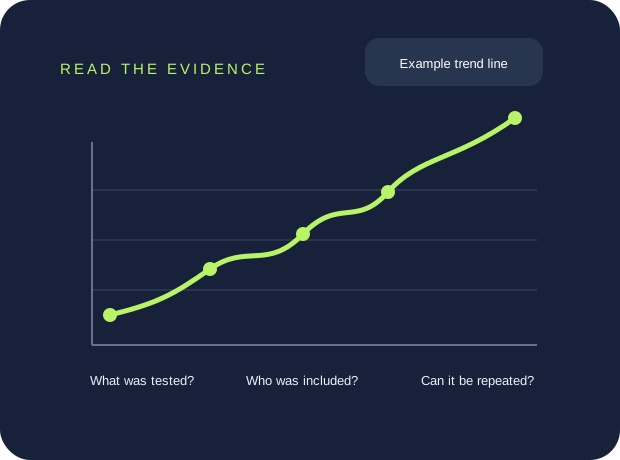
Read the method before the headline
When you encounter a claim about AI performance or impact, look for the task being measured, the people or data included, and the conditions under which the system was tested. A result on a benchmark may not predict how a tool performs in a different setting.
Pay attention to the date, comparison group, limitations, and who funded or conducted the work. These details help you understand how far the findings can reasonably travel.
Questions that keep a report in perspective
- What question did the researchers set out to answer?
- Was the evaluation based on real use, a controlled test, or a benchmark?
- Which groups or contexts are missing from the evidence?
- What uncertainty or limitation do the authors describe?
- Can another team reproduce the result?
Look at people, systems, and institutions together
AI does not enter a vacuum. Its effects depend on the people using it, the decisions around it, and the systems that adopt it. A careful discussion can hold several questions at once: what a model can do, where it fails, how work changes, and what safeguards are in place.
Stanford HAI’s work spans research, education, and policy. That broad structure is a useful reminder to consider technical questions alongside human and institutional effects.